 All experiences


Best Food & Drink in Athens
Must-See Venues in Athens


 Buy Ticket
 More information



All attractions in Athens





 Athens
: Guided Food Tour


 Athens
: Guided Food Tour


Athens: Top 10 Things to Do, Landmarks and Culture
The Acropolis anchors Athens, a city where ancient monuments remain part of a busy modern capital. Greece’s largest city lies in Attica, within a Mediterranean coastal urban area. Its recorded history spans more than 3,400 years, and Classical Athens helped shape democracy, philosophy, education and the arts. That inheritance gives the city its international significance, but contemporary Greek cultural and social life gives it its daily energy.
Athens rewards attention beyond its celebrated ancient skyline. Roman, Byzantine and Ottoman monuments add layers to its historical centre, while major museums broaden the picture of Greek art and archaeology. Around the Acropolis, winding streets and Neoclassical buildings bring the city down to a more intimate scale. Wooded hills, central gardens, performing arts and religious traditions make a visit more varied than a succession of archaeological sites.
Top 10 things to do in Athens
10. Pause in the National Gardens
Between the Parliament and Zappeion buildings, the National Gardens bring greenery into central Athens. Walk among flowers and trees, pause beside the ponds and look for resident tortoises. The gardens provide a quieter interval between monuments and museums, with benches and shaded spaces that invite a slower pace in the middle of the city.
9. Explore the Stavros Niarchos Cultural Centre
In the seaside suburb of Kallithea, the Stavros Niarchos Cultural Centre combines architecture, gardens and cultural events. Its terrace gives views towards the Acropolis in one direction and the coast in the other, revealing Athens’ wider setting. Explore the complex and its grounds, or attend an evening concert to connect the city’s contemporary cultural life with its landscape.
8. Witness the Easter Vigil traditions
For a visit over Greek Easter, the Holy Saturday vigil brings one of Athens’ most distinctive religious traditions into public view. Candlelit processions descend the hill, with hundreds of people carrying lights through the night. It is a vivid expression of the city’s living Orthodox culture, complementing the churches and religious monuments encountered around the historical centre.
7. Attend the Athens-Epidaurus Festival
The Athens-Epidaurus Festival is a major recurring event in the city’s performing-arts calendar, with a broad programme that connects visitors to contemporary cultural life. Attend a performance to see another side of a capital strongly associated with antiquity. The festival also extends beyond Athens to the ancient theatre at Epidaurus, so distinguish city performances from those outside the capital.
6. Walk Dionysiou Areopagitou Street
This pedestrianised route follows the southern slopes of the Acropolis, linking the area of the Temple of Olympian Zeus with Thissio. Views of the Parthenon and the Agora make the walk particularly rewarding: monuments appear within the wider cityscape as you move. It is a coherent route through the historical centre, away from the traffic of the busier streets.
5. Wander Plaka and Anafiotika
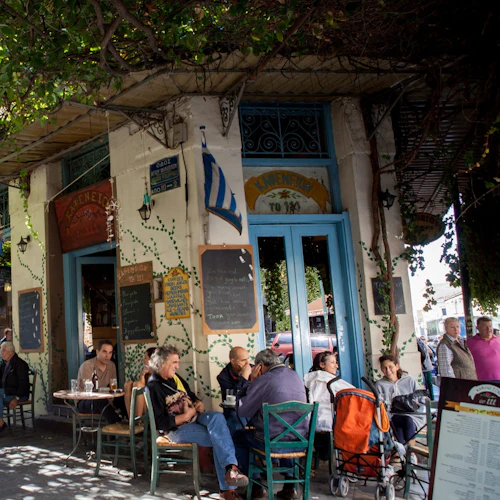
At the foot of the Acropolis, Plaka and Anafiotika reveal Athens through narrow, winding streets and buildings on a more intimate scale. Look for Neoclassical architecture, small Greek Orthodox churches and glimpses of the Acropolis above. Cafes and shops keep these areas closely connected to present-day city life, while the streets themselves invite exploration between the major monuments.
4. Visit the Ancient Agora of Athens
The Agora was a meeting place for ancient Athenians, making it an important stop for understanding the city beyond its hilltop temples. Its significance lies in the shared spaces of the ancient city and the people who gathered there. Seen alongside the Acropolis, it brings a civic dimension to a visit focused on Athens’ Classical heritage.
3. Explore the National Archaeological Museum
The National Archaeological Museum holds the world’s largest collection of ancient Greek antiquities. Its breadth makes it a central cultural stop in Athens and expands the scope of a visit beyond the capital’s own monuments. Allow space in your itinerary for this wider encounter with ancient Greece, alongside time spent exploring the archaeological sites themselves.
2. Visit the Acropolis Museum
The Acropolis Museum is one of Athens’ principal cultural institutions and a natural companion to the city’s defining ancient landmark. Give it a distinct place in your itinerary alongside the hill itself. Together, the museum and monument create a focused introduction to the Acropolis, balancing time at an archaeological site with a visit to a major museum.
1. Climb the Acropolis of Athens
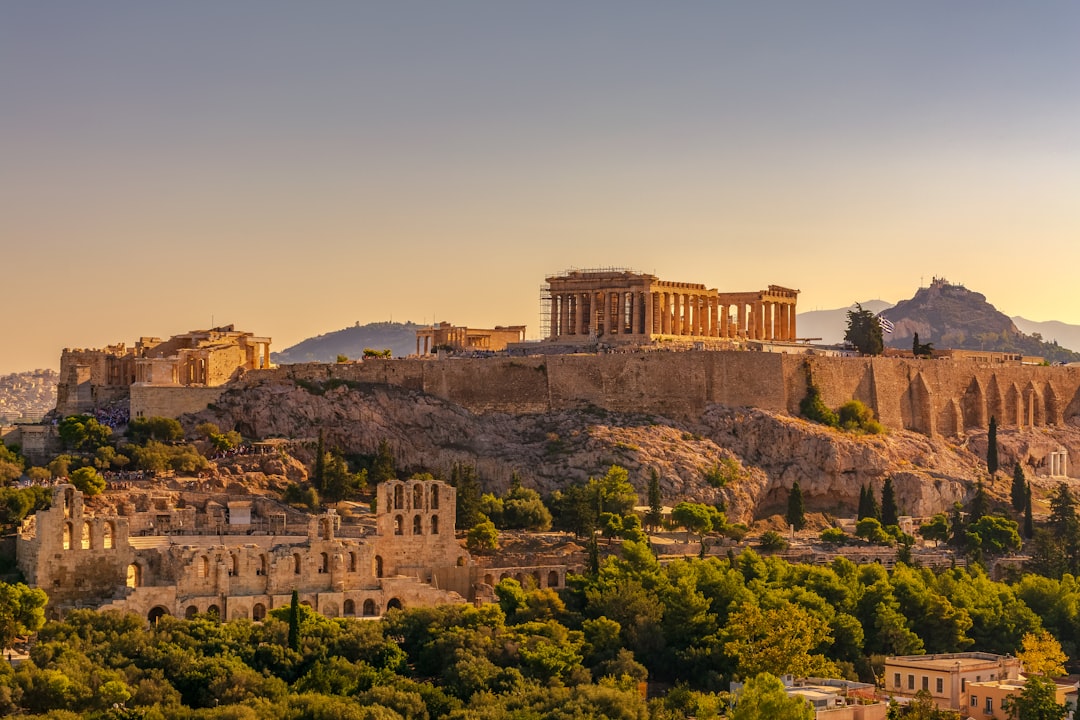
The Acropolis is Athens’ defining landmark and a UNESCO World Heritage Site. Enter through the monumental Propylaea and explore the temples that shape its unmistakable skyline: the Parthenon, the Erechtheion with its female caryatid supports, and the Temple of Athena Nike. Their architecture and commanding hilltop setting make this the essential encounter with the city’s Classical heritage.