 All experiences


Best On the Water in Budapest
Must-See Venues in Budapest
 Budapest

 Buy Ticket
 More information
All attractions in Budapest






Budapest: City Highlights and Things to Do
The Danube gives Budapest its defining landscape: Buda’s hills rise above the western bank, facing the grand buildings and comparatively flat streets of Pest. Hungary’s capital and largest city stands in the Pannonian Basin and became a unified city when Buda, Pest and Óbuda joined in 1873. Its riverbanks, Castle Quarter and Andrássy Avenue form a UNESCO World Heritage ensemble.
Royal heritage and Ottoman rule have shaped the city alongside the architectural ambition of the Austro-Hungarian era. Today, Budapest is Hungary’s cultural centre, with major museums, a strong classical music tradition and thermal bathing rooted in its natural springs. Recurring celebrations range from the Budapest Spring Festival and Sziget to the national holiday fireworks above the Danube on 20 August.
Budapest city highlights
Andrássy Avenue and the State Opera House
Andrássy Avenue connects monumental streetscape with Budapest’s performing arts tradition. Follow the boulevard towards City Park, taking in the State Opera House and its grand staircase. An opera or classical concert gives the architecture a living context. Along the avenue, the House of Terror examines the Nazi and Communist eras inside a former secret police headquarters, adding a stark historical dimension to the walk.
Dohány Street Synagogue
The Dohány Street Synagogue is a central landmark of Hungarian Jewish religious and cultural life. Its monumental scale makes it a major architectural sight, while the associated Hungarian Jewish Museum and Archives adds context to a visit. Together, they provide a focused introduction to Jewish heritage within Budapest’s broader history and give substance to an exploration of the surrounding Jewish quarter.
Budapest’s thermal bathing tradition
Budapest’s geothermal springs sustain a bathing culture with roots reaching back to Roman times. Spend part of a day at Széchenyi Spa, beside the lake in City Park, to make that tradition part of your visit. The setting also brings several city attractions together: the park’s walking routes, Vajdahunyad Castle and the lake provide space to explore before or after bathing.
Buda Castle and Castle Hill
Castle Hill brings Budapest’s royal past and river panoramas into one walk. The Royal Palace houses the Hungarian National Gallery and Budapest History Museum, with collections spanning art, medieval Budapest and the palace’s history. Continue to Matthias Church and Fisherman’s Bastion, where the lookout terraces face Pest across the Danube. Allow time for both the cultural institutions and the changing views between these landmarks.
The Danube waterfront and Hungarian Parliament
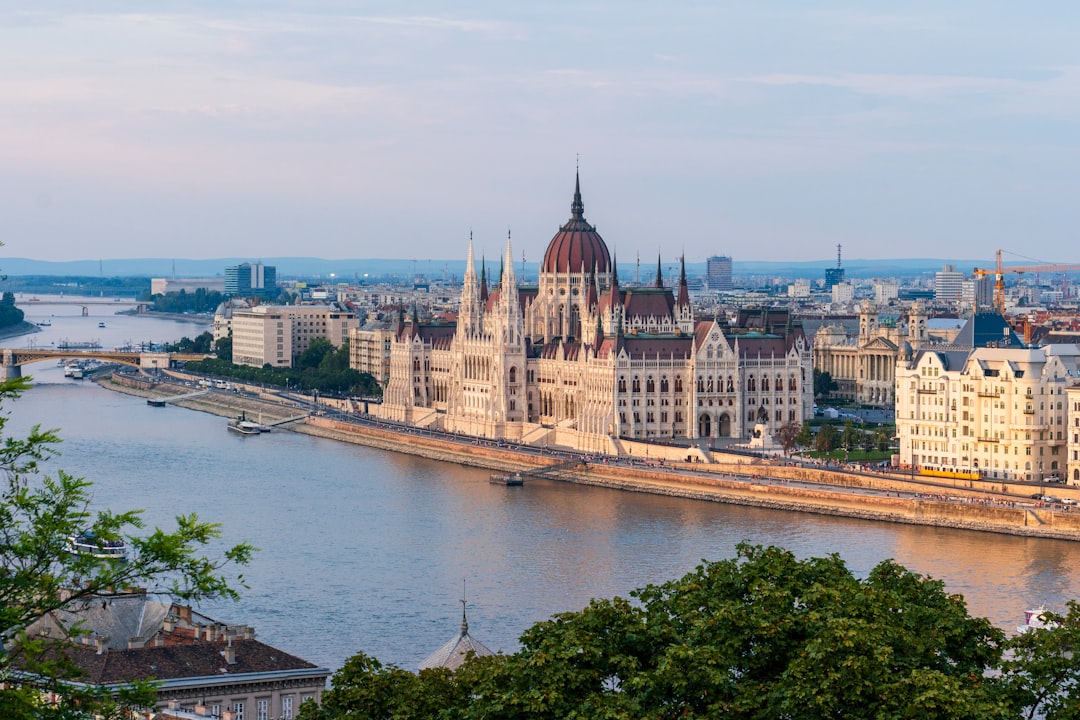
The Danube waterfront is Budapest’s defining cityscape, framed by bridges, Castle Hill and the Neo-Gothic Hungarian Parliament. Walk the riverbanks and see the Chain Bridge, then explore Parliament’s interior, where the Holy Crown of Hungary is displayed. A Danube sightseeing cruise reveals how the landmarks relate across both banks; after dark, the illuminated riverfront gives the same architecture a striking new appearance.