All experiences


Best attractions in Kalabaka
Current Events and Exhibitions in Kalabaka
All attractions in Kalabaka

 Kalabaka


Kalabaka Guide: Meteora Monasteries, Churches and Caves
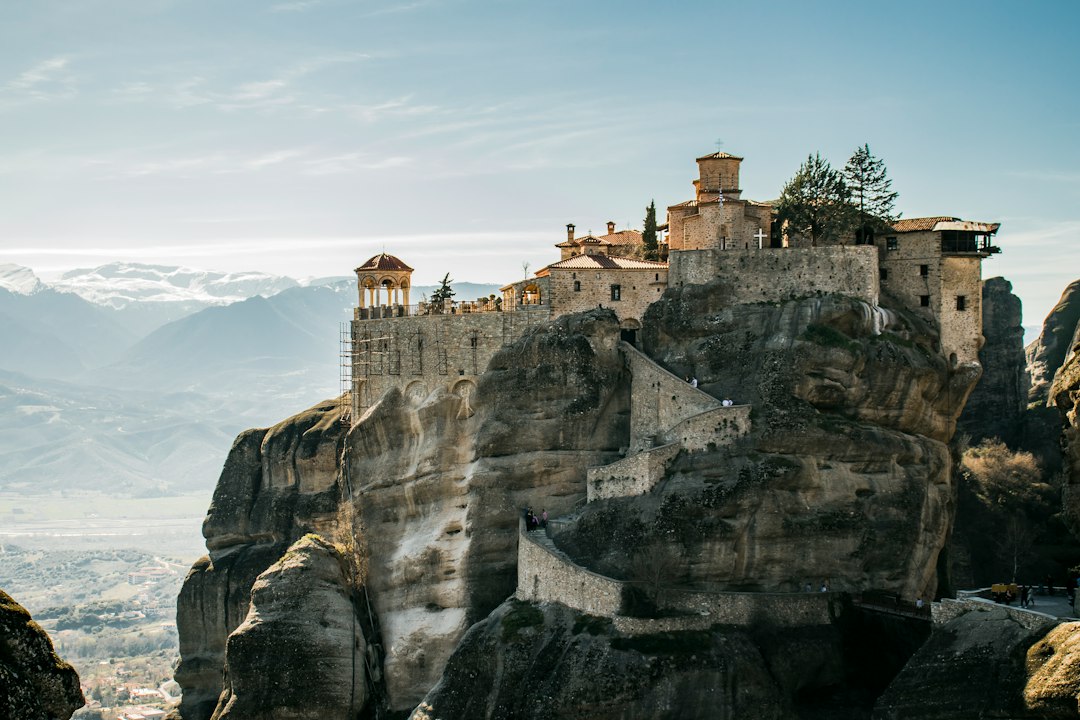
Meteora’s clifftop monasteries give Kalabaka its defining setting: a Greek town beneath rocks crowned by religious communities. In the Trikala regional unit of Thessaly, Kalabaka is the seat of the municipality of Meteora and a base for exploring the monasteries nearby. The town proper had 8,573 residents at the 2021 census.
Also written as Kalambaka or Kalampaka, the town brings together everyday Thessalian life and an enduring religious heritage. Its historic church rewards time away from the cliffs, while nearby Kastraki marks the western approach to Meteora. Farther afield, Theopetra adds a much deeper human timescale to a visit centred on medieval monasteries.
What to see and do in Kalabaka
Meteora’s clifftop monasteries
The six active, visitable monasteries of Meteora are the area’s defining sights. Great Meteoron, the oldest and largest, anchors the monastic heritage, while Varlaam’s museum holds relics and ecclesiastical treasures. Their cliff-edge settings are integral to their impact. Access varies considerably: Holy Trinity involves a demanding ascent, whereas St Stephen is reached across a small bridge. Each monastery combines religious life with a distinct position among the rocks.
The Church of Koimisis Theotokou
Kalabaka’s historic cathedral brings the area’s religious art into the town itself. Dating largely to the 14th century, the Church of Koimisis Theotokou stands on the site of an earlier Christian basilica. Inside, a large stone ambo, surviving architectural fragments and frescoes from several centuries reveal successive layers of worship and craftsmanship. These details make the interior a rewarding place to look closely at the town’s built heritage.
Theopetra Cave and early human history
Near Kalabaka, Theopetra Cave shifts attention from medieval religious communities to the long history of human habitation in the region. This limestone cave preserves evidence of occupation extending across much of the past 50,000 years. Its significance lies in that extraordinary timespan: it gives the surrounding landscape a human history far older than the churches and monasteries that dominate most visits to the area.
Natural history and mushroom displays
The town’s natural history displays provide a change of subject from its religious monuments. Ground-floor dioramas feature taxidermy birds and mammals from around the world, inviting close observation of animal forms. Upstairs, mushroom dioramas, murals and explanatory facts turn attention to fungi. The contrast between the two collections gives this indoor stop a distinctive character, moving from familiar wildlife subjects to a more specialised natural-history theme.





 152
 1447