 All experiences


Best Tours & Experiences in Corfu
Must-See Venues in Corfu
All attractions in Corfu
 Corfu


Corfu Town Guide: Fortresses, Museums and Traditions
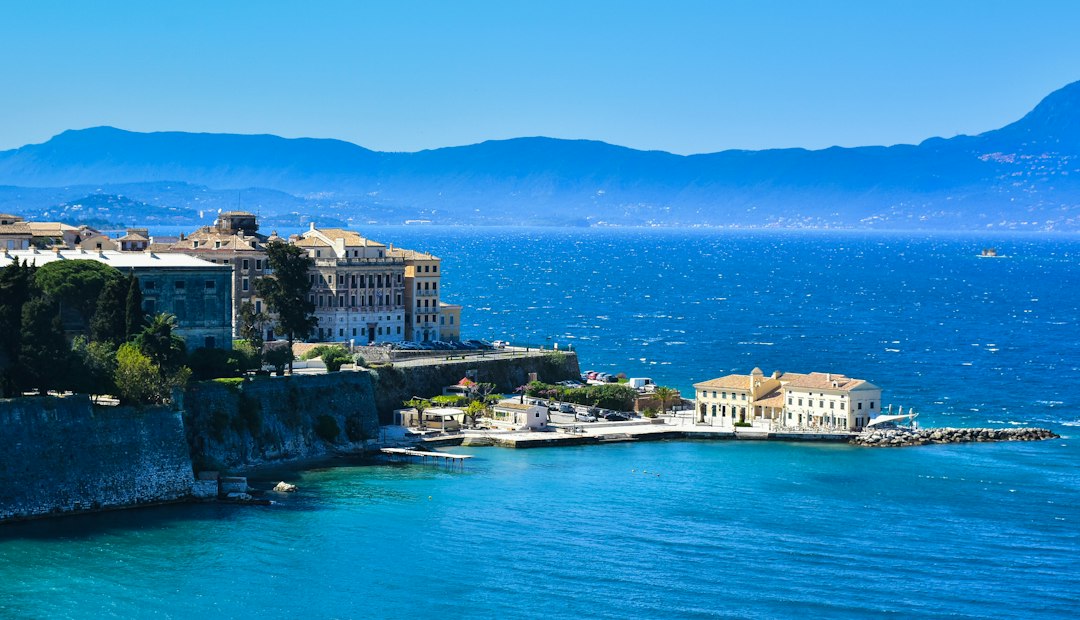
Corfu Town’s fortresses, arcaded promenades and museums reveal the many influences that have shaped this Ionian capital. Known in Greek as Kerkyra, the city is the capital of the island of Corfu and a regional centre for Greece’s Ionian Islands. Its history reaches back to antiquity, while Venetian, French and British rule left distinct marks on its architecture and cultural institutions.
The city rewards attention to both its monumental buildings and its living traditions. Public squares remain gathering places for residents and visitors, churches preserve important religious art, and Easter and Carnival give the cultural calendar a strong local character.
What to see and do in Corfu Town
The Old and New Fortresses
The Old Fortress makes Corfu’s defensive history tangible: a Byzantine stronghold rebuilt under Venetian rule, it withstood Ottoman sieges in 1537, 1571 and 1716. The Church of St George stands within its grounds. Pair it with the New Fortress, built by the Venetians in the 16th century on San Marco Hill. Its barracks, underground passages, water ducts and ammunition stores reveal the infrastructure behind the city’s military defences.
Spianada and the Liston
Spianada is Corfu Town’s central square and a natural place to observe its public life. Designed in the style of European royal gardens, the space once served as a firing range for Venetian troops. Along its western side, the Liston introduces a different architectural chapter. Built in 1807 during French imperial rule, its long arcades drew inspiration from Paris’s Rue de Rivoli. Together, the square and arcades form a distinctive setting for a walk through the city centre.
Archaeology and art in the city’s museums
The Archaeological Museum anchors a visit in ancient Corfu, with the Gorgon pediment from the Temple of Artemis and the Archaic Lion of Menecrates among its key works. At the northern end of Spianada, the Museum of Asiatic Art occupies the former Royal Palace and holds more than ten thousand objects from across Asia. For religious painting, the Antivouniotissa church houses the Byzantine Museum’s collection of Byzantine and post-Byzantine icons, adding another dimension to the city’s cultural collections.
St Spyridon, Easter and Carnival
The Church of St Spyridon is central to Corfu’s religious identity. Built in 1589, it holds the island patron saint’s remains in a silver reliquary beneath a ceiling decorated with 17 gilded panels. The church provides a meaningful starting point for understanding the city’s devotional traditions. Greek Easter is a major celebration here, while Corfu’s Carnival has a history stretching back more than 450 years to early Venetian rule. These recurring celebrations connect the city’s present-day culture with its long religious and civic history.