Hamburg: Top 10 Things to Do, from the Port to the Alster
Hamburg’s harbour shapes the city: its waterfronts, merchant architecture and cultural life all reflect a long connection with international trade. Set on the Elbe at its confluence with the Alster and Bille in northern Germany, Hamburg is both a city and a federal state. Germany’s second-largest city has more than 1.9 million residents, while its official name, the Free and Hanseatic City of Hamburg, preserves its distinctive political and trading heritage.
Water connects many of its most rewarding sights, from warehouse-lined canals to the Alster lakes and the Elbphilharmonie concert hall. Beyond the waterfront, Hamburg has historic churches, theatres, a lively music scene and the nightlife of St. Pauli. Its UNESCO-listed architecture and enduring harbour celebrations give the city a character rooted in commerce but expressed through much more than shipping.
Top 10 things to do in Hamburg
10. See the water and light displays at Planten un Blomen
Planten un Blomen brings together green space and one of Hamburg’s distinctive seasonal traditions: water-light concerts on the park lake. Music, illuminated fountains and choreographed water displays turn the setting into an outdoor performance space. The recurring spectacle adds a theatrical dimension to a park visit and provides a gentle counterpoint to the busy waterfront.
9. Visit Hagenbecks Tierpark
Established in 1907 by Carl Hagenbeck, this well-known zoo has a particular place in the development of animal displays. Its founder pioneered the concept of “zoos without bars,” making the institution significant beyond its animal collections. A visit adds a different chapter to Hamburg’s cultural landscape, away from the merchant buildings and quays that dominate the centre.
8. Discover the Sunday Fischmarkt
Hamburg’s oldest open-air market dates to 1703 and remains a distinctive Sunday-morning tradition. At the foot of the historic Fish Auction Hall, vendors call out their wares across a market whose range extends well beyond fish. Live music in the hall adds to the atmosphere, bringing trading and entertainment together in a setting closely associated with the waterfront.
7. Explore St. Pauli and the Reeperbahn
St. Pauli is central to Hamburg’s nightlife, with the Reeperbahn among Europe’s best-known red-light districts. The wider area combines entertainment, alternative shopping and less formal music venues. Hamburg’s role in the early story of the Beatles adds another cultural thread to a visit here, alongside the city’s continuing reputation for theatres, musical shows and live performance.
6. Spend time beside the Alster lakes
The Binnenalster and Außenalster reveal a quieter side of Hamburg’s relationship with water. Walk beside the central Binnenalster to appreciate the lake within the cityscape, or explore the greener shores of the Außenalster. Boat trips also bring the waterways into focus, showing how lakes, regulated streams and canals have shaped the city’s layout and everyday surroundings.
5. Admire Hamburg’s Rathaus
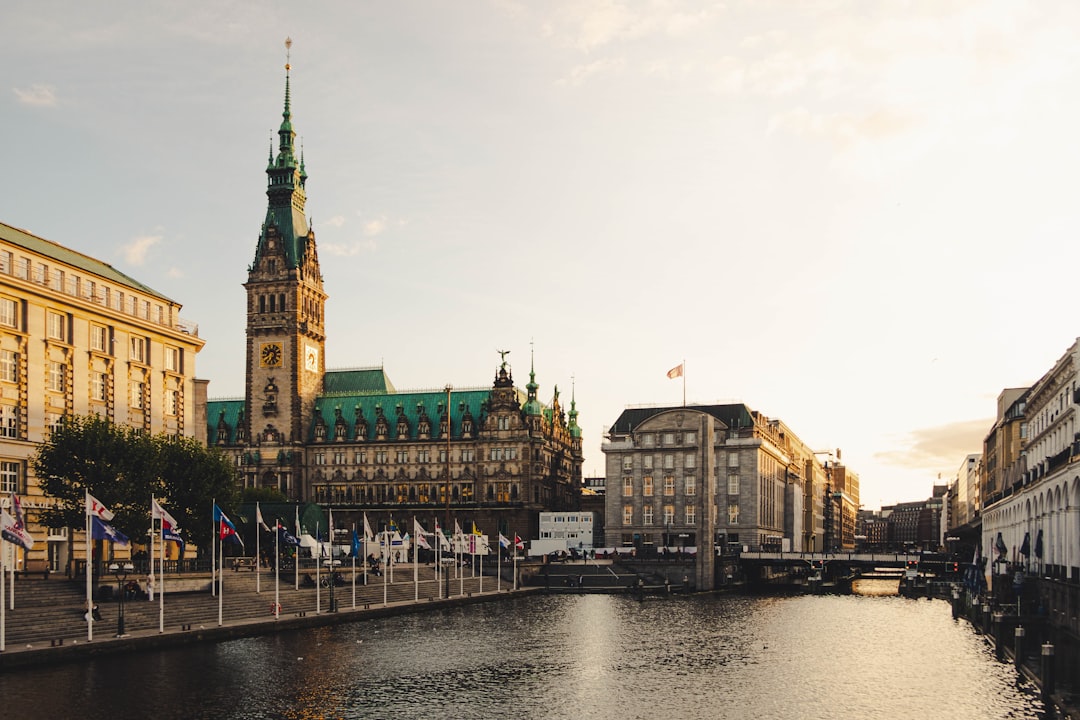
Hamburg’s town hall gives architectural form to its civic independence and merchant wealth. Home to the city’s parliament and senate, it remains a working centre of government as well as a major landmark. Its imposing presence makes it a natural focus for exploring the city centre, where historic churches, canals and bridges reveal different layers of Hamburg’s urban identity.
4. Explore the Kontorhausviertel
The Kontorhausviertel forms part of Hamburg’s UNESCO World Heritage inscription alongside the Speicherstadt. This historic commercial quarter helps explain the city through the architecture of business, extending the story beyond ships and warehouses. Explore it as a distinct part of Hamburg’s trading heritage, with buildings that express the importance of commerce to the city’s development.
3. Take in the view from the Elbphilharmonie
The Elbphilharmonie is one of Hamburg’s defining cultural landmarks and a prominent concert venue. Its Plaza provides a particularly revealing perspective on the city: a circular outdoor walkway, 37 metres above ground, looks across the port and urban skyline. The panorama connects Hamburg’s musical life with the working waterfront that has shaped its identity.
2. Walk through the Speicherstadt
The Speicherstadt’s warehouse architecture and canals form one of Hamburg’s most recognisable urban landscapes. Inscribed on the UNESCO World Heritage List with the Kontorhausviertel in 2015, the district preserves a powerful expression of the city’s commercial heritage. Explore on foot to appreciate the relationship between buildings, bridges and waterways, with changing views that reward attention to the architecture.
1. Discover Hamburg’s port and the Elbe waterfront
The port is Hamburg’s defining landmark: a vast working harbour linking this inland city to the North Sea and the wider world. Explore the historic Landungsbrücken and old quays, or take one of the Hamburg harbour cruises for a view from the water. The annual Hafengeburtstag celebrates this maritime identity with ship parades, stages and waterfront festivities, bringing the city’s enduring connection with its harbour into full view.
 All experiences



 Hamburg
 (71)
 Buy Ticket
 More information


