 All experiences



 Helsinki
: Winter Wonderland Hike
Relish the peaceful winter magic of the taiga forest

From
155
€

 Helsinki
 Helsinki
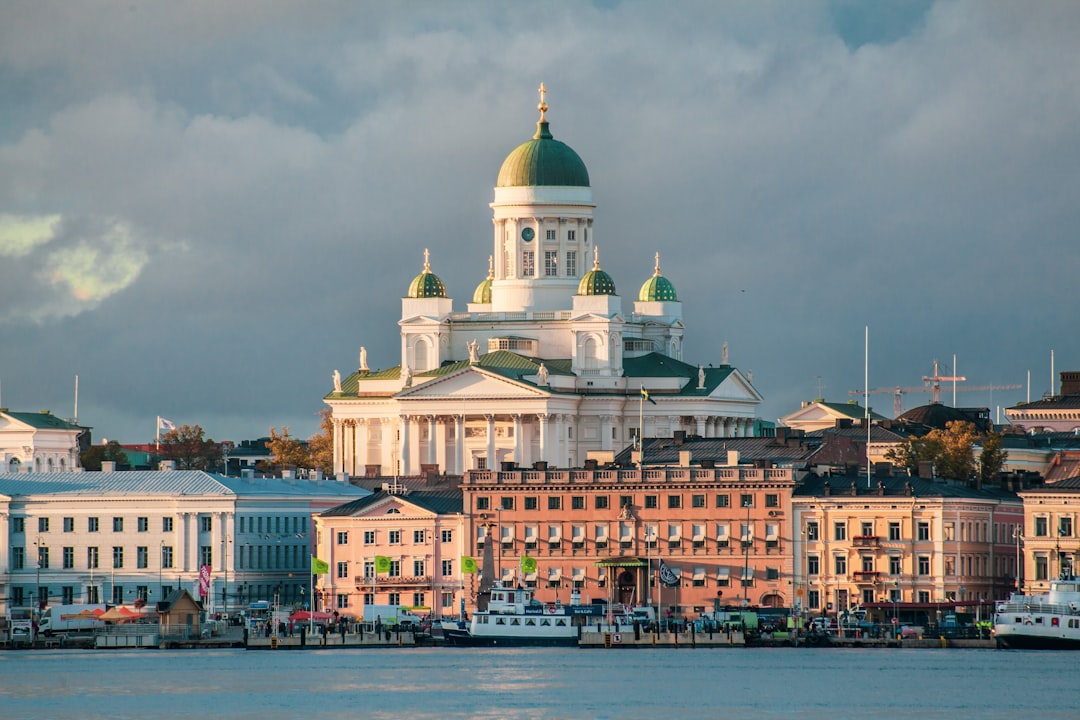
’s neoclassical squares, island fortress and inventive architecture give Finland’s capital a distinctive Baltic character. Set on the Gulf of Finland and surrounded by hundreds of small islands, the country’s largest city combines a compact historic centre with waterfronts and open green spaces. Finnish and Swedish are its official languages, reflecting a cultural identity shaped by both Nordic connections and its position between East and West.
Founded as a Swedish trading town in 1550, Helsinki became Finland’s capital under Russian rule in 1812. Today it is a national centre for culture, education and politics, with a strong design tradition. Its appeal stretches from major Finnish art collections to public saunas, where an everyday national custom remains part of urban life.
Explore Katajanokka and Ullanlinna for Helsinki’s distinctive interpretation of Art Nouveau, known locally as Jugendstil. Hundreds of buildings across the city belong to this architectural tradition, with decorative details often drawing on the Finnish national epic, the Kalevala. Looking closely at their façades reveals a more expressive side of Helsinki than the formal compositions around Senate Square.
Oodi, Helsinki’s central library, makes contemporary architecture part of everyday public life. Pair it with Amos Rex, whose underground domed galleries are combined with the historic Lasipalatsi building. Together, these cultural landmarks show how the city continues to develop its design identity through places for reading, gathering and encountering art.
Start at Helsinki Central Railway Station, completed in 1919 to Eliel Saarinen’s design. Its architecture captures a transition from Finnish National Romanticism towards modernism. Continue towards Töölö Bay to see Finlandia Hall, one of Alvar Aalto’s best-known buildings. The Academic Bookstore provides another setting in which to appreciate Aalto’s attention to interiors and human-scaled design.
The Ateneum introduces Finland’s visual culture through a collection extending from the 18th century to the modern era. Look for works by Helene Schjerfbeck and Akseli Gallen-Kallela, including the latter’s Lemminkäinen’s Mother. Hugo Simberg’s The Wounded Angel is another celebrated work in the collection, making this a key stop for understanding the country’s artistic imagination.
Public saunas bring one of Finland’s defining traditions into the capital’s social life. Kotiharjun Sauna, opened in 1928, preserves a wood-fired experience, while Löyly combines sauna bathing with contemporary design and access to the sea. Beside Market Square, Allas Sea Pool brings together saunas and warm and cold pools in a central waterfront setting.
The sea shapes Helsinki’s geography and its visitor appeal. Spend time along the waterfront to appreciate the relationship between the city, its green spaces and the surrounding islands. A Helsinki sightseeing cruise extends that perspective into the archipelago, placing the capital’s buildings within their wider coastal setting. Summer brings the connection between urban life and nature into particular focus.
Uspenski Cathedral is a major Orthodox landmark near Helsinki’s neoclassical centre. It adds an important dimension to a city whose churches and civic buildings reflect both Swedish and Russian influences. Visiting it alongside the Lutheran cathedral gives a clearer sense of the different religious and architectural traditions that helped shape the Finnish capital.
Excavated directly into solid rock, Temppeliaukio Church is one of Helsinki’s most distinctive architectural sights. Known as the Rock Church, it makes the bedrock itself central to the building’s identity. Its setting provides a striking contrast to the formal neoclassical churches of the historic centre and broadens any exploration of the city’s religious architecture.
Suomenlinna connects Helsinki’s maritime setting with its military past. Established in the mid-18th century on islands just outside the city, the fortress became a substantial settlement alongside Helsinki itself. Explore the island setting to understand the capital’s relationship with the sea, and include the Suomenlinna Museum as part of a visit focused on the fortress’s heritage.
Senate Square and Helsinki Cathedral form the defining ensemble of the capital’s historic centre. Carl Ludvig Engel helped shape the surrounding neoclassical cityscape, with the cathedral completed in 1852. Take in the relationship between the church, Government Palace and the square’s statue of Alexander II: together, they express the grand architectural vision behind Helsinki’s development as a capital.
 Buy Ticket
 More information


