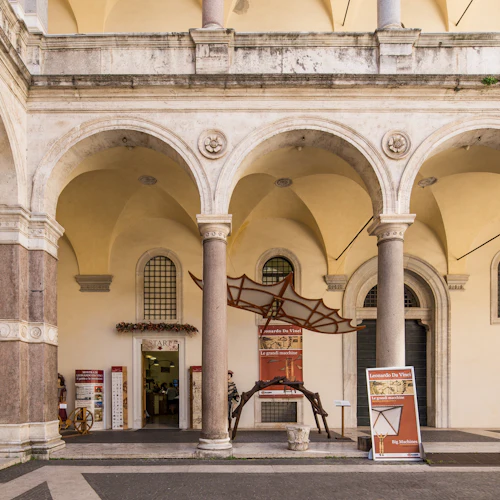
Rome’s ancient monuments stand within a living capital of palaces, churches, fountains and narrow streets. Set along the Tiber in central-western Italy, the city is the capital of both Italy and the Lazio region, with 2.7 million inhabitants. Its UNESCO-listed historic centre brings an extraordinary concentration of heritage into the everyday life of the city.
Across 28 centuries, Rome has been shaped by imperial power, the papacy and the artists who made it a major centre of Renaissance and Baroque culture. Vatican City, an independent country within Rome’s municipal boundaries, remains the headquarters of the Catholic Church. Beyond the monumental sights, neighbourhood walks, music and summer performances reveal the contemporary city.
Top 10 things to do in Rome
10. Hear a concert at Parco della Musica
Parco della Musica brings Rome’s performing arts into a distinctive architectural setting. Its three concert halls have forms inspired by musical instruments and surround an open-air amphitheatre. Classical music, jazz and popular music all feature here, with Italian and international performers. A concert adds a contemporary cultural dimension to a visit dominated by ancient monuments.
9. Discover Rome’s summer cultural season
Estate Romana fills the city’s summer cultural calendar with music, cinema, theatre and other events. Its range extends from jazz and classical performances to activities for children. Look beyond the permanent monuments to appreciate how Rome uses performance and public gatherings to animate the city, with a programme that brings several artistic traditions together.
8. Walk along the Tiber
The Tiber gives Rome a different scale: bridges, riverbanks and views back towards the streets above. Steps near many bridges lead down to paths beside the water, where walking or cycling provides a break from road traffic. River conditions matter, particularly in winter, when high water can make these lower paths inaccessible.
7. Explore Trastevere on foot
Trastevere rewards time spent walking, with cafés and trattorias providing natural pauses along the way. Its appeal lies in neighbourhood life and the chance to follow streets without making every stop a monument. Explore it as part of Rome’s contemporary social landscape, allowing space for the everyday rhythms that sit alongside the capital’s grander sights.
6. Follow the ancient Appian Way
The old Appian Way extends the exploration of ancient Rome beyond the central concentration of ruins. Approaching from the area south of the Colosseum and the Baths of Caracalla brings a well-preserved stretch of city wall into view. Follow this historic route to consider the ancient city through its roads and boundaries as well as its monumental buildings.
5. Visit the Baths of Caracalla
The Baths of Caracalla are a major stop for exploring ancient Rome south of the Colosseum. Their archaeological setting also has a place in the city’s performing arts tradition: summer opera takes place among the ruins. Visiting the site and attending a performance reveal two distinct aspects of the same place, linking ancient remains with live culture.
Built as a mausoleum for Emperor Hadrian, Castel Sant’Angelo later became a refuge for popes during periods of danger. A fortified covered corridor connects it to the Vatican. Those successive roles give the imposing monument particular interest: its story connects imperial commemoration with the practical demands of papal security beside the Tiber.
3. Discover Vatican City
Vatican City is an independent country enclosed within Rome and the headquarters of the Catholic Church. Its religious and cultural importance makes it central to understanding the city’s wider identity. Visit St. Peter’s Basilica and explore the Vatican Museums, including the Sistine Chapel, to encounter the sacred and artistic dimensions of this small state.
The Pantheon stands out for the remarkable preservation of an ancient building dating to AD 125. Its interior draws attention upwards to the opening in the ceiling, which leaves the space exposed to changing weather. Take time to look at the relationship between the enclosed architecture and the sky; rain makes that connection especially tangible.
1. Explore the Colosseum, Roman Forum and Palatine Hill
The Colosseum anchors Rome’s defining archaeological landscape. Explore it alongside the Roman Forum and Palatine Hill to grasp the concentration of ancient remains in this part of the city. The Arch of Constantine stands beside the Colosseum, while the Palatine leads towards the ruins of the Flavian Palace and views of the Circus Maximus.
 All experiences


 Rome
 (21883)
 Buy Ticket
 More information
 -18%