Verona: Top 10 Things to Do, from the Arena to Juliet’s House
Verona’s Roman Arena anchors a city celebrated for its architecture, opera and Shakespearean associations. In northern Italy’s Veneto region, Verona combines ancient monuments with medieval streets, substantial churches and an art collection housed inside a fortified castle beside the River Adige. Its urban structure and architecture earned UNESCO World Heritage recognition in 2000.
The city grew in importance under Roman rule, flourished under the medieval della Scala dynasty and later became part of the Venetian Republic. Those successive eras remain visible across its historic centre. Shakespeare gave Verona another enduring identity through Romeo and Juliet, The Two Gentlemen of Verona and The Taming of the Shrew. Today, its cultural appeal extends from church art and civic museums to the Arena’s opera season and the wine traditions of nearby Valpolicella.
Top 10 things to do in Verona
10. Discover Amarone and Valpolicella wine
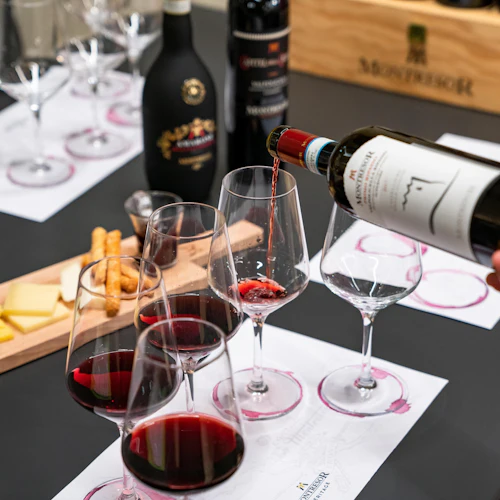
The nearby Valpolicella wine region adds a distinctive food-and-drink dimension to a Verona visit, with Amarone its best-known draw. An Amarone wine tasting introduces this regional speciality within the city. For a broader exploration, wine tours into Valpolicella connect Verona’s cultural sights with the surrounding wine-producing area.
9. Look closely at Porta Borsari
Porta Borsari preserves the remains of a Roman gateway dating to at least the second century AD. It is a useful place to appreciate Verona’s ancient identity beyond the Arena: Roman architecture survives within the everyday fabric of the city. Pause at the gate to examine its architectural details before continuing through the historic centre.
8. See Verona from the Lamberti Tower
The Lamberti Tower rises above Piazza delle Erbe and is the tallest of Verona’s towers. Completed in 1463, it provides a broad view over the city, helping make sense of the streets and monuments explored at ground level. The ascent, by stairs or lift, is the central attraction; the palace courtyard forms its entrance.
7. Visit Sant’Anastasia
Sant’Anastasia is one of Verona’s principal churches and an important stop in a city rich in religious architecture. Give it time alongside the cathedral and San Zeno to appreciate how strongly churches shape Verona’s artistic identity. Together, these buildings place sacred art and architecture at the centre of an exploration of the city.
6. Explore Verona Cathedral
Verona Cathedral rewards close attention to both sculpture and painting. Its Romanesque marble façade includes griffins supporting the entrance pillars and biblical reliefs around the doorway. Inside, Gothic alterations shape the nave, while the side chapels include Titian’s Assumption. The smaller side entrance also merits a pause for its medieval carvings, including Jonah and the whale.
5. Make time for San Zeno
San Zeno belongs among Verona’s defining sights and its most significant church visits. It adds another essential dimension to a city whose artistic heritage spans late medieval and early Renaissance traditions. A visit here broadens the picture established by the Roman monuments and civic squares, bringing Verona’s religious heritage firmly into view.
4. Visit Juliet’s House
Juliet’s House embodies Verona’s enduring connection with Shakespeare, though its story needs a clear distinction between literature and history. The medieval house was associated with the Cappello family; its identification with the fictional Capulets developed later. Converted into a museum in the 1930s, it received its courtyard balcony during that transformation. Its appeal lies in this meeting of architecture, literary imagination and cultural memory.
3. Spend time in Piazza delle Erbe
Piazza delle Erbe occupies the site of Verona’s Roman forum and remains a focal point of the city. Its market, fountain and surrounding towers bring several periods of urban history into one square. Look for the fourteenth-century Gardello Tower, then take time to absorb the setting: this is one of the clearest places to understand Verona as a city shaped by successive generations.
2. Explore Castelvecchio and its art museum
Castelvecchio combines a fourteenth-century red-brick fortress with Verona’s civic art museum. Inside, medieval sculpture and Renaissance painting give substance to the city’s artistic reputation; outside, the ramparts reveal the castle’s defensive character. Continue onto the adjoining bridge over the Adige for views back towards the fortress. The collection, fortifications and riverside setting make this a particularly rewarding visit.
1. See the Arena and its opera tradition
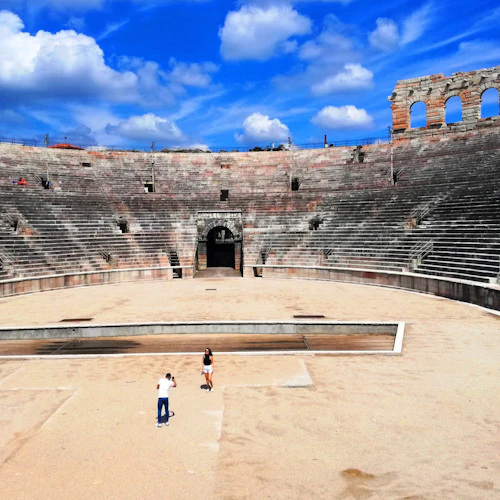
The Arena is Verona’s most emblematic monument: a first-century Roman amphitheatre that remains a performance venue. Its surviving masonry supports the vast tiered interior, while a fragment of the outer wall, known as the Ala, recalls the structure’s original form. Explore it as an ancient monument, or attend the opera season to encounter the living cultural tradition that has made it central to Verona’s identity.
 All experiences





 Verona
 (1814)